
Among the months of the year, May stands out with its vibrant energy, blooming flowers, and warm weather in many parts of the world. In this lesson, we'll explore Spanish vocabulary related to el mes de mayo (the month of May), including holidays, events and natural phenomena. Let's dive in!
May is packed with festivities and special occasions. Here are some key events celebrated during this month:
May 1st is Labor Day in many countries around the world, celebrated to honor the contributions of workers. In Spanish-speaking countries, it's known as el Día del Trabajo.
On May 5th, Mexico celebrates Cinco de Mayo, commemorating the Mexican Army's victory over the French Empire at the Battle of Puebla in 1862. It's a day filled with parades, music and traditional Mexican cuisine.
In many Spanish-speaking countries, Mother's Day falls on the second Sunday of May. It's a day to honor and appreciate mothers and mother figures for their love and sacrifice.
The prestigious Cannes Film Festival takes place annually in May, showcasing the best of international cinema. It's a prominent event in the film industry calendar.
May marks the transition to warmer weather and the peak of spring in the Northern Hemisphere. Let's explore some vocabulary related to nature during this beautiful month:
May is known for its abundance of blooming flowers. From colorful tulips to fragrant roses to exotic bougainvilleas, gardens come to life in May:
La buganvilla, también conocida como bougainvillea, es una planta originaria de América del Sur conocida por sus vistosas y vibrantes flores.
The bougainvillea, also known as "buganvilia," is a plant [that's] native to South America, known for its attractive and vibrant flowers.
Captions 7-9, Fermín y las plantas Buganvilla
Play Caption
As the days grow longer and temperatures rise, the sun becomes a prominent feature of May. People enjoy outdoor activities under the warm rays of the sun.
In some regions, May brings occasional showers that nourish the earth and contribute to spring's lush greenery.
Birds are more active in May, building nests, singing melodies and raising their young. It's a time when the air is filled with the sounds of chirping birds.
La primavera se caracteriza, entre otras cosas, por los sonidos de los pájaros cantando desde sus nidos.
Spring is characterized, among other things, by the sounds of the birds singing from their nests.
Captions 2-3, Jacky Canción de los pájaros
Play Caption
In Spanish culture, there are several expressions and sayings associated with the month of May. Let's learn a few:
This saying emphasizes the idea that the weather conditions in March and April contribute to the beauty of the month of May. Let's hear it:
"Marzo ventoso y abril lluvioso hacen a mayo florido y hermoso".
"Windy March and rainy April make May flowery and beautiful."
Caption 46, Aprendiendo con Silvia Dichos populares - Part 1
Play Caption
This saying reflects the belief that a blossoming May foretells a fruitful and prosperous year ahead.
This is a reminder that as May weather can be unpredictable, it's wise to be prepared for cooler days. Let's listen to Silvia's explanation about this popular saying:
"Hasta el cuarenta de mayo no te quites el sayo". Nos indica que aunque en mayo puede hacer días soleados y calurosos, el verano en toda regla no llega hasta que haya entrado bien el mes de junio.
"Until May fortieth, don't take off your tunic." It indicates to us that even though in May, there can be sunny and hot days, the full-blown summer doesn't arrive until June has begun properly.
Captions 60-64, Aprendiendo con Silvia Dichos populares - Part 1
Play Caption
That wraps up our lesson on Spanish vocabulary for the month of May! Did you enjoy learning about May traditions and nature? Feel free to share your favorite May memories or traditions, and don't hesitate to send us your questions and comments.
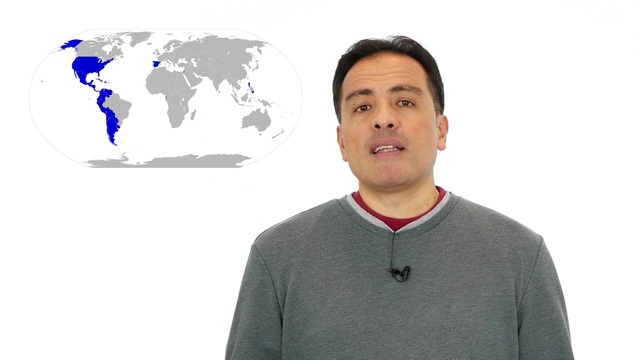
Spanish Language Day, known as El Día del Idioma in Spanish, is an annual celebration that falls on April 23rd. This special date highlights the importance of the Spanish language and its cultural significance. This lesson will delve into the origins of this celebration and explore some key facts about "the language of Cervantes."

Spanish Language Day, declared officially by UNESCO (the United Nations Educational, Scientific and Cultural Organization) in 2010, is observed on April 23rd. This day serves as a celebration of the Spanish language's significance as an official and intercontinental language, recognizing its rich history and cultural impact.
Initially, celebrations were held on October 12th to coincide with el Día de la Hispanidad (Columbus Day) in certain countries, which commemorates Colombus' arrival to the American continent. However, the date was later changed to April 23rd to align more closely with evolving worldviews and honor the memory of Spanish writer Miguel de Cervantes, who passed away on April 22, 1616 but was buried the next day.
Coincidentally, April 23rd also marks the death of English playwright William Shakespeare. This shared date of remembrance highlights the enduring legacies of both Cervantes and Shakespeare, as well as the global impact of their work and languages.
Spanish boasts 590 million speakers worldwide, making it the world's second most spoken language.
Spanish is among the world's top four most studied languages, with 21 million students currently learning it.
With over 480 million native speakers, Spanish ranks as the language with the second most native speakers worldwide. It is also the third most used language on the internet, highlighting its relevance in the digital sphere.
With widespread use in various sectors across the globe, Spanish serves as a language that facilitates mutual understanding in the realms of culture, business and beyond.
The United States, Brazil and France top the list of countries where Spanish is most commonly learned.
The Spanish language is distinguished by the presence of an official institution, La Real Academia Española (The Royal Spanish Academy), which was founded in 1713. Ever since, this institution has had the mission of ensuring the proper use and unity of the Spanish language, serving as a guardian of linguistic standards and norms while recognizing regional distinctions.
Aside from its millions of speakers, Spanish is also the official language in at least 21 countries, including Spain, the majority of Latin American nations and the African country Equatorial Guinea. Do you know why Spanish is spoken in Equatorial Guinea? Let's hear Carlos explain it:
Igualmente quiero mencionar, que en Guinea Ecuatorial se habla español, gracias a un tratado del siglo dieciocho, a través del cual Portugal le cedió a España este territorio. Se estima que hoy en día el setenta y cuatro por ciento de la población ecuatoguineana, habla español de forma nativa.
I also want to mention that in Equatorial Guinea, Spanish is spoken, thanks to an eighteenth-century treaty through which Portugal ceded this territory to Spain. It is estimated that today, seventy-four percent of the Equatoguinean population speaks Spanish natively.
Captions 61-67, Carlos explica Recursos para consultas del español - Part 1
Play Caption
In addition to Spanish Language Day, Book Day is also celebrated every April 23rd to pay tribute such renowned writers as Miguel de Cervantes and William Shakespeare. This tradition, initiated by Vicente Clavel Andrés in 1923, has become an international celebration via which UNESCO promotes culture and intellectual property protection.
The city of Barcelona, Spain, also marks this date with a very unique celebration: Sant Jordi's Day! Let's find out more about it:
un día como hoy, Sant Jordi, es el día en que se une el amor y la cultura. Además de ser el Día del Libro, para nosotros aquí en Barcelona tiene una tradición muy especial. A las mujeres se les suele regalar rosas, por una tradición y un cuento maravilloso de una doncella que estaba en peligro y fue rescatada por un príncipe de aquel peligroso dragón. Hubo un momento en el que ese amor se transformó en una rosa y es por ello que a ellas se les regala una rosa. Regalan ellas a ellos un libro, por ser parte del Día del Libro; así que es una tradición muy bonita.
a day like today, Sant Jordi, is the day that love and culture come together. In addition to being Book Day, for us here in Barcelona, it has a very special tradition. Roses are typically given to women due to a tradition and a wonderful tale of a maiden who was in danger and was rescued by a prince from that dangerous dragon. There was a moment in which that love became a rose, and that's why they [female] are given a rose. They [female] give them [male] a book because it's part of Book Day; so, it's a very nice tradition.
Captions 53-63, Víctor en España La fiesta de Sant Jordi
Play Caption
With this clip, we have come to the end of this lesson. As you can see, studying Spanish is one of the best intellectual and cultural investments that you can make. We hope you keep learning Spanish, and don't forget to send us your suggestions and comments.

Are you familiar with gender in Spanish, which classifies Spanish nouns into masculine and feminine? If so, you might also know that Spanish grammatical agreement stipulates that nouns' definite and indefinite articles should agree with the nouns they accompany in terms of gender. That said, since the vast majority of Spanish nouns that end in -o are masculine and most that end in -a are feminine, why do we see the masculine singular indefinite article un next to a noun that ends in -a below?
¡Eres un egoísta!
You're a selfish person!
Caption 31, Los Años Maravillosos Capítulo 12 - Part 8
Play Caption
The reason for this apparent discrepancy is that, when used as a noun, the word egoísta (selfish person) falls into a Spanish noun category that is sometimes called "common gender nouns" that describe people and can take either masculine or feminine articles depending upon whether the described entity is male or female. With this in mind, let's learn a plethora of such nouns in Spanish as well as several categories that they often fall into.
Below are several Spanish nouns that end in -ista. While we have selected ten, there are countless more, many of which refer to professions in Spanish or people who adhere to particular beliefs.
el/la artista (the artist)
el/la centrista (the centrist)
el/la colonialista (the colonialist)
el/la dentista (the dentist)
el/la derechista (the right-winger)
el/la futbolista (the soccer player)
el/la izquierdista (the leftist)
el/la novelista (the novelista)
el/la periodista (the journalist)
el/la vocalista (the vocalist)
Now, let's see two of these in context, noting how their articles change when describing males vs. females.
¿No oyó la periodista Yasmín?
Didn't you hear Yasmín the [female] journalist?
Caption 28, Kikirikí Agua - Part 3
Play Caption
el periodista y el entrevistado llegaron a las manos, ¿hm?,
the [male] journalist and the interviewee came to blows, hmm?
Caption 51, Aprendiendo con Silvia Frases hechas - Part 5
Play Caption
El dentista, la dentista.
The male dentist, the female dentist.
Caption 32, Isabel El Género Gramatical - Masculino y Femenino
Play Caption
The genders of the following Spanish words that end in -crata (the equivalent of -crat in English) also vary according to real life gender:
el/la autócrata (the autocrat)
el/la burócrata (the bureaucrat)
el/la demócrata (the democrat)
el/la aristócrata (the aristocrat)
Let's look at an example that describes a male aristocrat:
Desde luego, será un aristócrata,
Of course, he'd be an aristocrat,
Caption 56, Beatriz Expresiones con colores
Play Caption
Note how this sentence could be modified to describe a female aristocrat with the simple substitution of a feminine article:
Desde luego, será una aristócrata,
Of course, she'd be an aristocrat,
In addition to the aforementioned categories, here are several more Spanish nouns ending in -a whose articles reveal their gender:
el/la guía (the guide)
el/la policía (the police officer)
el/la psicópata (the psychopath)
el/la sociópata (the sociopath)
el/la terapeuta (the therapist)
While it may seem counterintuitive to call a female fashion model una modelo, that is indeed the correct way to say it, while a male model would be un modelo. Here are a few more common gender nouns in Spanish that end in -o with examples of the latter.
el/la miembro (the member)
el/la modelo (the model)
el/la soldado (the soldier)
el/la testigo (the witness)
Sí, tengo un testigo.
Yes, I have a [male] witness.
Caption 2, Los casos de Yabla El perrito malcriado - Part 2
Play Caption
quisiera invitar a este estrado a una testigo que va a demostrar
I'd like to invite to this stand a [female] witness who is going to prove
Captions 63-64, Confidencial: Asesino al Volante Capítulo 5 - Part 4
Play Caption
Although most Spanish nouns that end in -e are specifically masculine (e.g. el coche/the car) or feminine (e.g. la llave/the key) and thus require a masculine or feminine article, some can refer to either men or women with articles that vary accordingly. Let's see a list of several plus two examples describing both a male and a female "lover."
el/la amante (the lover)
el/la ayudante (the helper)
el/la cantante (the singer)
el/la estudiante (the student)
el/la integrante (the member)
el/la interprete (the interpreter)
el/la paciente (the patient)
el/la recipiente (the recipient)
Descubrí que Marcela tiene un amante.
I found out that Marcela has a [male] lover.
Caption 2, Confidencial: Asesino al Volante Capítulo 2 - Part 3
Play Caption
¿Tiene una amante? Eso es lo que quiero saber.
Does he have a [female] lover? That is what I want to know.
Caption 9, Muñeca Brava 3 Nueva Casa - Part 7
Play Caption
That's all for today. We hope that this lesson has clarified one scenario in Spanish where you might see a masculine article with a word ending in -a, a feminine article with one that ends in -o or the very same noun with a masculine or feminine article. For more on Spanish nouns that are a bit nontraditional in terms of gender, be sure to read our lesson on epicene nouns in Spanish, and don't forget to write us with your questions and comments.
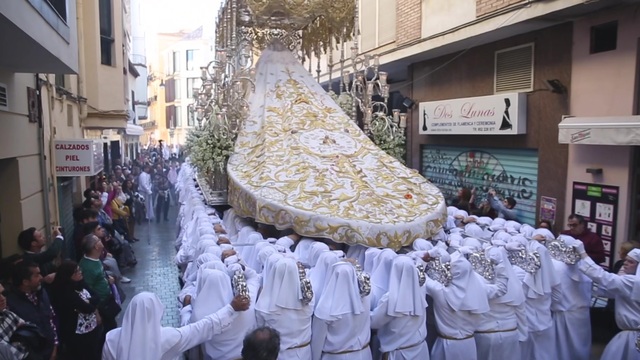
Of Christian origin, Easter, or Pascua in Spanish, is celebrated by many around the world, including in Spanish-speaking countries. Regardless of religion, however, Easter has evolved into many fun traditions that may be observed by Christians and non-Christians alike. Let's talk about some religious and non-religious Easter customs in the Spanish-speaking world and beyond, along with some Spanish vocabulary to describe them.
Holy Week, or Semana Santa, is an important festive period for many Catholics and other Christians worldwide that commemorates the crucifixion and resurrection of Jesus Cristo (Jesus Christ) and is celebrated with particular fervor in Spain and Latin America. While there are variations among the different countries' festivities, common costumbres (customs) include attending church, the sharing of special foods, the blessing and distribution of palm leaves and days of elaborate procesiones with special floats and statues, as we can hear about and catch a glimpse of in the following clips:
más de cincuenta mil personas se visten de nazarenos para desfilar por las calles y para acompañar a las figuras religiosas.
more than fifty thousand people dress as Nazarenes to parade through the streets and to accompany the religious figures.
Captions 41-44, Raquel Fiestas de España
Play Caption
Todo esto sin olvidar el sentimiento religioso; la Semana Santa de Málaga es la particular forma de los malagueños de vivir su fe.
All of this without forgetting the religious sentiment; Málaga's Holy Week is the people from Málaga's particular way of living their faith.
Captions 33-35, Málaga Semana Santa
Play Caption
Now let's look at a list of useful Spanish vocabulary related to some of the days and customs of the Semana Santa season:
la Cuaresma: Lent
el Domingo de Ramos: Palm Sunday
el Miércoles de Ceniza: Ash Wednesday
el Miércoles Santo: Spy Wednesday
el Jueves Santo: Maundy Thursday
el Viernes Santo: Good Friday
El Domingo de Pascua/de Resurección/de Gloria: Easter Sunday
El Lunes de Pascua/de Resurección: Easter Monday
bendecir: to bless
los católicos: the Catholics
los cristianos: the Christians
el día de ayuno: the fasting day
las hojas de palmera: the palm leaves
la iglesia: the church
la imagen/el paso: the statue
el trono: the float/throne
Let's hear a couple of these pronounced:
Y el tambor se toca desde Miércoles Santo a las cuatro de la tarde hasta Domingo de Resurrección
And the drum is played from Holy Wednesday at four o'clock in the afternoon until Easter Sunday
Captions 48-49, Francisco Javier de España Su trabajo y su ciudad en La Mancha
Play Caption
Interestingly, many of the non-religious Easter symbols and traditions that are celebrated around the world actually have religious origins. For example, eggs, chickens and rabbits are symbols of fertility, rebirth and new life that many associate with Jesus' resurrection. However, for many others, these objects and activities are merely fun and festive annual traditions. Let's learn some Spanish vocabulary to describe some of them:
la búsqueda/la caza de huevos de Pascua: the Easter egg hunt
la cesta de Pascua: the Easter basket
el chocolate: the chocolate
el conejo de Pascua: the Easter Bunny
el cordero: the lamb
las flores: the flowers
el huevo de Pascua: the Easter egg
el pollito: the chick
la primavera: the spring
el sombrero de primavera: the Easter bonnet
teñir/pintar huevos: to dye/color eggs
We can hear many of these together in Yabla's video on basic Easter vocabulary, some captions from which we can hear below:
Cinco, caza del huevo de Pascua.
Five, Easter egg hunt.
Caption 9, Vocabulario básico Feliz Pascua
Play Caption
Uno, el conejo de Pascua.
One, the Easter Bunny.
Caption 5, Vocabulario básico Feliz Pascua
Play Caption
Dos, la cesta de Pascua.
Two, the Easter basket.
Caption 6, Vocabulario básico Feliz Pascua
Play Caption
To conclude this lesson, it would be behoove us to know how to wish someone a "Happy Easter" in Spanish:
"Felices fiestas" o "Felices Pascuas".
"Happy Holidays" or "Happy Easter."
Caption 13, Aprendiendo con Silvia Felicitar y expresar buenos deseos - Part 2
Play Caption

Do you know the names of the shapes in Spanish? Today's lesson will teach you what the most basic Spanish shapes are called as well as the words for more advanced Spanish shapes and figures. Let's get started!
Let's start with the basics! Listen to the following caption from the Yabla Spanish video library to hear how to say "shapes" in Spanish:
Puedes jugar con diferentes formas y colores
You can play with different shapes and colors
Caption 76, Manos a la obra Papel picado para Día de muertos
Play Caption
Now, let's hear the Spanish word for the similar concept of "figures":
como los números o las figuras geométricas,
like numbers or geometric figures,
Caption 16, Carlos explica Vocabulario de las matemáticas - Part 1
Play Caption
Next, we'll learn the Spanish names for the most classic shapes, including their definite articles, and hear them in context:
Vamos a marcar el círculo
We're going to mark the circle,
Caption 47, Maoli Calabaza de Halloween
Play Caption
se presenta como un cuadrado de ocho por ocho
appears as an eight by eight square
Caption 18, Aprendiendo con Carlos El ajedrez - Part 1
Play Caption
Puede ser un cuadrado, un rectángulo.
It can be a square, a rectangle.
Caption 41, María Fernanda Hacer un turbante
Play Caption
Obtendrás un triángulo.
You will get a triangle.
Caption 39, Manos a la obra Separadores de libros: Charmander
Play Caption
Let's move on to the Spanish words for some slightly more sophisticated shapes and hear them pronounced:
—podríamos decir que es un óvalo—
we could say that it's an oval—
Caption 49, Con Marta por Madrid La Plaza del Sol - Part 2
Play Caption
Lograrás un rombo como éste.
You will get a diamond like this one.
Caption 45, Manos a la obra Separadores de libros: Charmander
Play Caption
Interestingly, this word also means "trapezius" (the muscle) in Spanish as well as "trapeze," as in the following example, which we've included for pronunciation purposes:
como un número de trapecio,
as a trapeze act,
Caption 18, Circo Berlín Jose - Part 2
Play Caption
"semicírculo",
"semicírculo" [semicircle],
Caption 74, Carlos explica Los prefijos en español - Part 7
Play Caption
Figures with at least three but typically five or more sides and angles are called los polígonos (the polygons) in Spanish. Let's learn their Spanish names along with their respective numbers of lados (sides) and ángulos (angles):
El pentágono (the pentagon): 5
El hexágono (the hexagon): 6
El hectágono (the hectagon): 7
El octógono (the octagon): 8
El nonógono (the nonagon): 9
El decágono (the decagon): 10
While not "official" geometric shapes, figures like the heart, cross, star, etc., are recognized universally as shapes and/or symbols. Let's learn how to say them in Spanish!
a hacer pancitos de corazón, pancitos decorados y este tipo de, de...
into making heart rolls, decorated rolls, and this kind of, of...
Caption 18, Hispanoamericanos en Berlín Luis y el pan de muerto
Play Caption
es la cruz de piedra.
is the stone cross.
Caption 16, Viajando con Carlos Popayán - Colombia - Part 2
Play Caption
y la estrella.
and the star.
Caption 27, Ana Carolina Símbolos de Navidad
Play Caption
con la punta bien afilada en forma de flecha,
with a well-sharpened tip in the shape of an arrow
Caption 32, Isabel Lavesa Dibujo en acuarela
Play Caption
Do you know how to say 3-D in Spanish? You could say tridimensional (three-dimensional) or simply use the Spanish pronuncation of 3-D, as we hear here:
Y las obras están sacadas de modelos 3-D del programa Google Earth.
And the works are taken from 3-D models from the Google Earth program.
Caption 24, El estudio De Julio Sarramián
Play Caption
That said, we'll conclude this lesson with the names of several of the most common formas tridimensionales (3-D shapes):
¿podría ponerme un cono de chocolate por favor?
can you give me a chocolate cone please?
Caption 36, Málaga Calle Larios
Play Caption
en forma de pirámide invertida.
in the shape of an inverted pyramid.
Caption 14, Víctor en Caracas Centro comercial
Play Caption
That's all for today. We hope that you have found this lesson on the names of the shapes in Spanish useful, and don't forget to write us with your questions and comments. ¡Hasta pronto!

Do you know how to express the idea of "instead" and "instead of" in Spanish? Today's brief lesson will teach you four common ways to do so, as always with examples from Yabla's Spanish video library.
Perhaps the most common way to say "instead of" in Spanish is en vez de. Alternative translations for en vez de are the English synonyms "rather than" or "in place of." Let's see this phrase in context:
cierran a las ocho y media en vez de a las nueve, ¿correcto?"
you close at eight-thirty instead of at nine, correct?"
Caption 47, Aprendiendo con Silvia Horas, fechas y períodos de tiempo - Part 4
Play Caption
Sam compró seis melones en vez de seis limones.
Sam bought six melons instead of six lemons.
Caption 36, Extr@: Extra en español Ep. 2: Sam va de compras - Part 5
Play Caption
En lugar de literally means "in place of" of and is another way to say "instead of" in Spanish. Let's see two examples:
En lugar de plumas amarillas, las suyas eran grises
Instead of yellow feathers, his were grey,
Captions 22-23, Cleer El patito feo
Play Caption
No se olviden que en lugar de "finalmente" también podría decir "por último"
Don't forget that instead of "finally" I could also say "lastly"
Captions 32-33, Natalia de Ecuador Los adverbios de orden
Play Caption
The Spanish phrase en cambio can be translated as "instead" in certain contexts (other possible translations include "however" and "whereas"). Let's take a look.
Si en cambio queremos usarlo para expresar una valoración, lo usamos con un verbo en modo subjuntivo.
If instead we want to use it to express a valuation, we use it with a verb in the subjunctive mood.
Captions 52-53, Carlos explica Cómo expresar opiniones en español - Part 3
Play Caption
Otras en cambio lo tiran o lo destruyen
Others instead throw it away or destroy it
Caption 39, Los Reporteros Sembrar, comer, tirar - Part 3
Play Caption
Finally, although mejor is most commonly translated as "better" or "best," it can function like "instead" in certain contexts, as we see here:
Pero, vecino, mejor le recomiendo usar la opción de agua fría;
But, neighbor, I recommend using the cold water option instead;
Caption 27, Cristina Lavandería
Play Caption
That's all for today. Now that you know four different ways to express the idea of "instead" in Spanish, we suggest you practice by coming up with your own sentences with each of them. And don't forget to write us with your suggestions and comments.
Are you familiar with the Spanish word según? Did you know that it can function as a preposition, a conjunction or even an adverb? Let's explore six meanings of this common Spanish word.
As a preposition, the Spanish word según can mean "according to," "in agreement with" or "in accordance with," in the sense of following or abiding by something. Let's see an example of this usage:
Yo estoy actuando según la ley.
I'm acting in accordance with the law.
Caption 11, Confidencial: Asesino al Volante Capítulo 3 - Part 10
Play Caption
As we see in the following captions, like "according to" in English, the Spanish preposition según can also appear before nouns or personal pronouns to describe what people or entities believe or say.
y según expertos es una de las más antiguas
and according to experts, it's one of the oldest ones,
Caption 25, Amaya Cata de vinos
Play Caption
Las pirámides, según los abuelos Mayas, no son monumentos
The pyramids, according to the Mayan elders, are not monuments
Caption 47, Guillermo el chamán La tecnología maya
Play Caption
This use of según as a preposition is often translated with the English phrase "depending on." In this case, según is often followed by a noun phrase that includes a verb in the subjunctive and describes some variable on which an outcome depends. Let's take a look:
que, según la manera en que respiremos, así va a ser nuestra vida.
as, depending upon the manner in which we breathe, that's how our life is going to be.
Captions 76-77, Ana Teresa La respiración
Play Caption
Esta planta tiene diferentes nombres según el país en que se encuentre,
This plant has different names depending on the country in which it is found,
Caption 15, Fermín La plumeria - Part 1
Play Caption
In this case, the Spanish word según is classified as a conjunction and is often followed immediately by a verb in the subjunctive mood. Typical translations include "depending on what" or "depending on how," as in the following example:
Según me sienta mañana, decidiré ir o no al evento.
Depending upon how I feel tomorrow, I'll decide whether or not to go to the event.
Let's see one more from the Yabla Spanish library:
Aquí se tira mucho o poco según se mire.
Here a lot or a little is thrown away depending on how you look at it.
Caption 20, Los Reporteros Sembrar, comer, tirar - Part 1
Play Caption
There are two ways in which the Spanish conjunction según can function like the English word "as." Let's take a closer look.
The Spanish word según can be replaced with the English word "as" to say "in the way that," as we see here:
Que según entiendo tampoco estás haciendo con juicio.
Which, as I understand, you're not doing sensibly, either.
Caption 59, Confidencial: Asesino al Volante Capítulo 5 - Part 7
Play Caption
según dicen algunos, que de ahí proviene el nombre de Coronil.
as some people say, from there comes the name Coronil.
Captions 10-11, Tecnópolis El Coronil
Play Caption
Según can also be translated as "as" as to talk about something that is happening at the same time as something else:
según iba caminando, iba interactuando con los niños, hablando, y a la vez
as I was walking, I was interacting with the kids, talking, and, at the same time,
Caption 81, Circo Berlín Christian - Part 1
Play Caption
Finally, as we see in the caption below, the word según in Spanish can stand alone as an adverb meaning "depending" or "it all depends."
Durante un año, según.
In a year, depending.
Caption 46, Edificio en Construcción Hablando con los trabajadores - Part 1
Play Caption
That's all for today. We hope that this lesson has helped you to distinguish the many nuanced uses of the word según in Spanish, and don't forget to write us with your suggestions and comments.

Have you heard the word capaz in Spanish? Although this word is often translated with the English term "capable," it has several different nuances and additional translations that are worth exploring. In this lesson, we will highlight five different ways in which this useful Spanish adjective can be employed.
We can use the word capaz in Spanish when referring to "capacity," or the number or amount of something that can fit in a determined space. Let's see an example of this usage:
El salón de baile es capaz para 1,500 personas.
The capacity of this ballroom is 1,500 people.
The word capaz can additionally be used to indicate someone or something's "ability" to do something:
Roberto es capaz de conducir un auto.
Roberto is capable of driving a car.
Note that in this example, we are merely saying that Roberto is "able" to drive a car (rather than implying that he is an excellent driver!). Let's see another, similar example:
Quiero comprar un barco que sea capaz de... de hacer travesías largas.
I want to buy a boat that is capable of... of making long voyages.
Captions 72-73, 75 minutos Gangas para ricos - Part 20
Play Caption
Contrary to the previous usage, the Spanish word capaz can also be used to emphasize someone's talent or ability. In this case, the person described actually excels at some task or is generally considered "qualified" or "efficient":
Ah, bueno, Juan Cruz es un muchacho muy capaz, un excelente muchacho.
Oh, well, Juan Cruz is a very capable guy, an excellent guy.
Caption 56, Muñeca Brava 45 El secreto - Part 5
Play Caption
Another meaning of the word capaz has to do with whether or not one "has it in them" or "would dare" to do something. Let's take a look at a couple of clips that illustrate this meaning:
¿Ah? ¡A ver! A ver si es capaz de decírmelo en mi cara.
Huh? Let's see! Let's see if you're capable of saying it to my face.
Captions 42-44, Tu Voz Estéreo Embalsamado - Part 12
Play Caption
¡A que no eres capaz!
I bet you can't do it!
Caption 53, Guillermina y Candelario El Mar enamorado
Play Caption
In the following clip, our friend Silvia shares with us an expression that fits into this use of capaz:
"No tener pelos en la lengua" quiere decir que esta persona es capaz de decir cualquier cosa de forma clara y directa, sin importarle lo que piensen los demás.
"Not to have hairs on one's tongue" means that this person is capable of saying anything clearly and directly, without what others think mattering to them.
Captions 13-16, Aprendiendo con Silvia Frases hechas - Part 4
Play Caption
In many Latin American countries, the expression Es capaz que can be used to say that "It's possible that" or something "might" happen, as in the sentence Es capaz que nieve (It might snow). Similarly, the Spanish word capaz can also function as an adverb with que or on its own to express the idea of "perhaps" or "maybe," as in the following examples:
Y capaz que lo conozco.
And maybe I know him.
Caption 53, Yago 14 La peruana - Part 3
Play Caption
capaz están cerca de un lugar para escalar
maybe you are near a place to climb
Caption 12, Buenos Aires Escalando en Buenos Aires
Play Caption
In fact, you might even hear someone answer a question like "¿Vas a la fiesta?" with the simple word: "Capaz" (Maybe/I might).
That's all for today. Having learned several ways to use capaz in Spanish, we invite you to write ten sentences with this very useful word— and don't forget to write us with your suggestions and comments.
This year, we have chosen a word that has already been named Word of the Year by other linguistic sources. In fact, it was FundeuRAE's Word of the Year last year. However, we believe that this word has gained new traction in the last twelve months, and, for this reason, have selected it as our Spanish Word of the Year 2023. Let's reveal it!
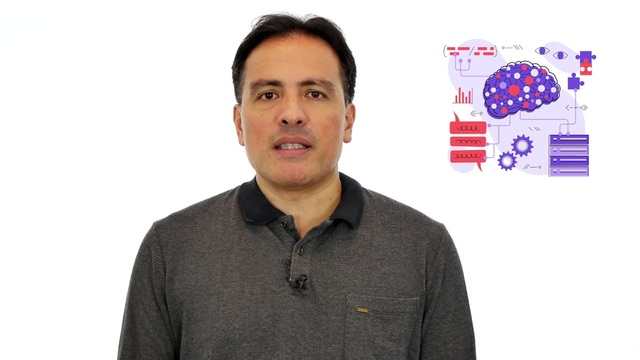
Is there anything more trendy than AI today? From ChatGPT to MidJourney and everything in between, the concept of AI is totally transforming the world around us. This is why we have chosen the term inteligencia artificial (artificial intelligence) as the Spanish Word of the Year 2023. Let's see how to pronounce this word in the definition that Carlos shares with us in his video about this topic:
la inteligencia artificial es la disciplina científica que se ocupa de crear programas informáticos que ejecutan operaciones comparables a las que realiza la mente humana, como el aprendizaje o el razonamiento lógico.
artificial intelligence is the scientific discipline that deals with creating computer programs that execute comparable operations to the ones that the human mind carries out, like learning or logical reasoning.
Captions 25-29, Aprendiendo con Carlos Inteligencia artificial - Part 1
Play Caption
Now that the winner has been revealed, here are a couple of things to keep in mind about the term inteligencia artificial:
1. In Spanish as in English, the term inteligencia artificial should be written in lowercase.
2. If you wish to use the acronym for inteligencia artificial, remember to use the Spanish initials "IA" rather than the English version, "AI," which some people mistakenly use in Spanish.
There are several AI-related Spanish words that have been quite popular this year, and dato (data) has definitely been one of them.
La percepción del comerciante coincide con el dato que manejan algunos expertos.
The perception of the merchant coincides with the data that some experts work with.
Caption 6, Los Reporteros Crecen los robos en tiendas - Part 4
Play Caption
Unfortunately, this word is still trending, especially after what has occurred this year in Israel.
La palabra más fea es guerra.
The ugliest word is war.
Caption 61, Karla e Isabel Palabras
Play Caption
This year was full of deadly earthquakes. From Turkey and Morocco to Afghanistan and Nepal, the world was shaking far too much this year.
Este mes han muerto muchas personas en el terremoto.
This month many people have died in the earthquake.
Caption 26, Lecciones con Carolina Participios - Ejemplos de uso
Play Caption
So, there you have it. What do you think of our Spanish Word of the Year 2023, and how do you feel towards AI in general? Can you think of any other word that is worthy of this title? Don't forget to send us your feedback!
Have you ever noticed that there are several types of words that are capitalized in English but not in Spanish? Today's lesson will point out nine such categories where there is a discrepancy in capitalization between English and Spanish.
While the names of the days of the week must be capitalized in English, the same is not so of the days of the week in Spanish, whose first letters are lowercase. Let's take a look:
Voy a una academia de baile los martes y los jueves.
I go to a dance academy on Tuesdays and Thursdays.
Caption 15, Ariana Mi Semana
Play Caption
The same can be said for the names of the months in Spanish, which are written in all lowercase letters in contrast to their capitalized English counterparts. This is demonstrated in the following clip:
sobre todo en los meses de diciembre, enero, febrero e incluso en mayo.
especially in the months of December, January, February, and even in May.
Caption 27, Mercado de San Miguel Misael
Play Caption
Although English capitalizes the names of languages, Spanish does not:
Bueno, yo hablo español, inglés y estoy aprendiendo alemán.
Well, I speak Spanish, English, and I'm learning German.
Captions 19-20, Cleer y Lida ¿Qué idiomas hablas?
Play Caption
Words that refer to someone or something's nationality do not start with a capital letter in Spanish as they do in English. Included in this category are both demonyms, or Spanish adjectives of nationality, and Spanish nouns that refer to the inhabitants of a particular nation. Let's see examples of each:
y puedas decir, "Este artista es colombiano, este es un artista brasilero", es decir,
and can say, "This artist is Colombian, this is a Brazilian artist," I mean,
Captions 69-70, Leonardo Rodriguez Sirtori Una vida como pintor - Part 5
Play Caption
Antes de la llegada de los españoles, existían cientos de diferentes culturas.
Prior to the arrival of the Spaniards, there were hundreds of different cultures.
Caption 8, Historia mexicana Cultura y la unión de dos mundos
Play Caption
As we see below, this group includes the names of religions, their respective adjectives, and the nouns that describe their adherents.
y que se utilizó para simbolizar el triunfo del cristianismo sobre la fe musulmana.
and was employed as a symbol of the triumph of Christianity over the Muslim faith.
Captions 61-62, Viajando con Fermín Sevilla - Part 2
Play Caption
España recibió más de treinta y cinco mil judíos,
Spain received more than thirty-five thousand Jews,
Caption 27, Víctor en España El Hotel Palace de Barcelona
Play Caption
When preceding a last name and/or addressing a specific person, English words like "mister" or "doctor" must be capitalized. The equivalent titles in Spanish, however, are written in all lowercase letters, as we see here:
Vamos a escuchar a la doctora Consejos y a su paciente Adrián
Let's listen to Doctor Advice and her patient Adrián
Caption 2, El Aula Azul La Doctora Consejos: Por y para
Play Caption
Por supuesto, señora Castaño.
Of course, Ms. Castaño.
Caption 24, Cleer y Lida Recepción de hotel
Play Caption
In English, most of the words of the titles of original compositions like books, films, songs, articles, or works of art are capitalized, with the notable exceptions of words like prepositions and coordinating conjunctions. In Spanish, on the other hand, only the first word of a title is capitalized, for example, the famed novel Cien años de soledad, which is written in English "One Hundred Years of Solitude." Let's see one more:
Para ello, el artista pintó un gran fresco titulado "El juicio final",
To do so, the artist painted a large fresco called "The Last Judgment,"
Caption 32, Aprendiendo con Carlos El microrrelato - Part 4
Play Caption
All of the words of proper nouns for specific geographical place names in English, like the Andes Mountains or Lake Titicaca, must be capitalized. In Spanish, however, the first words of these proper nouns are lowercase, e.g., la cordillera de los Andes and el lago Titicaca. Let's look at more examples:
y es atravesada por el río Cauca.
and is crossed by the Cauca River.
Caption 17, Viajando con Carlos Popayán - Colombia - Part 1
Play Caption
en el océano Pacífico y en el mar Caribe.
in the Pacific Ocean and in the Caribbean Sea.
Caption 46, Instinto de conservación Parque Tayrona - Part 4
Play Caption
Although the first person singular personal pronoun "I" is always written with a capital letter in English, its Spanish equivalent yo is not, as we can see here:
No, pueden llorar, pero yo tengo que trabajar.
No, you can cry, but I have to work.
Caption 9, La Sucursal del Cielo Capítulo 2 - Part 8
Play Caption
That's all for today. We hope that this lesson has helped to clarify several of the classes of words that should not be capitalized in Spanish, some of which might seem a bit counterintuitive to English speakers. Can you think of any additional cases in which Spanish and English capitalization are different? Feel free to write us with any questions or comments.
Since there is rarely an equivalent of the subjunctive in English, this grammatical mood can be extremely difficult for English speakers to understand. For this reason, the Yabla Spanish archive contains many lessons that deal with the plethora of scenarios in which the subjunctive is used in Spanish, and this lesson will address one more: the use of the subjunctive to describe either things we hope exist or things that definitely do not.
If we are "looking for," "seeking," "desiring," "needing" or "wanting" something or someone with certain characteristics but are not sure whether or not that person or thing exists, a subjunctive verb form should be utilized in Spanish. Let's see an example from the Yabla Spanish video library:
Por eso es que nosotros por lo regular buscamos trabajos que paguen a la semana,
That is why we usually look for jobs that pay weekly
Caption 35, La Banda Chilanguense El habla de México - Part 3
Play Caption
On the other hand, if the person or thing does exist, for example, we actually have a job that pays weekly, we should use an indicative verb form, as we see here:
Por eso es que nosotros por lo regular tenemos trabajos que pagan a la semana,
That is why we usually have jobs that pay weekly,
A typical formula for this usage involves some type of "seeking" or "wishing" verb or phrase plus the conjunction que plus a verb conjugated in the subjunctive. Let's look at examples of such "wishful" words and phrases. Note that the personal a is included when what is sought or hoped for is a person:
Wishful Verbs and Phrases:
Querer (a): to want
Buscar (a): to look for
Necesitar (a): to need
Desear (a): to desire/wish for
Querer encontrar (a): to want to find
Esperar encontrar (a): to hope to find
We can see many instances of the aforementioned construction in the video La Doctora Consejos: Subjuntivo y la persona ideal (Doctor Advice: Subjunctive and the Ideal Person). First, let's see an excerpt where the Doctor uses the indicative to describe a person who actually does exist:
Eh... No es tan joven como tú.
Um... She's not as young as you.
Caption 75, El Aula Azul La Doctora Consejos: Subjuntivo y persona ideal
Play Caption
In contrast, her patient employs the subjunctive in a similar sentence that describes the hypothetical person he seeks:
Es que yo busco a alguien que sea un poco más joven.
It's just that I'm looking for someone who's a bit younger.
Caption 76, El Aula Azul La Doctora Consejos: Subjuntivo y persona ideal
Play Caption
Note that this subjunctive formula can be frequently found in want ads since their very nature is to seek desired entities. Let's take a look at a couple of examples:
Se buscan cajeros que puedan trabajar el turno de la tarde.
Cashiers wanted who can work the afternoon shift.
Necesitamos a una persona que sea bilingüe.
We need a person who is bilingual.
Verbs that describe nonexistent people or things should also be conjugated in the subjunctive. The formula in this case includes some phrase that indicates nonexistence such as no hay nadie que (there's no one that), no hay nada que (there's nothing that) and no existe... (...doesn't exist) plus the conjunction que plus a verb in the subjunctive. Let's hear these in context:
No hay ninguna experiencia que sea cien por cien mala
There's no experience that's one hundred percent bad
Captions 69-70, Soledad El insomnio - Part 2
Play Caption
No existe persona en el mundo que rechace una propuesta de Aldo Sirenio.
There isn't a person in this world who refuses an offer from Aldo Sirenio.
Caption 45, Yago 5 La ciudad - Part 8
Play Caption
yo ya fui allá y no hay nadie que concuerde con la descripción que tenemos.
I already went there, and there isn't anyone who matches the description that we have.
Caption 42, Confidencial: El rey de la estafa Capítulo 2 - Part 3
Play Caption
Taking this last example, remember that if such a person actually did exist, a similar sentence could be created with the indicative:
yo ya fui allá y hay alguien que concuerda con la descripción que tenemos.
I already went there, and there is someone who matches the description that we have.
That's all for today. We hope that this lesson has clarified the use the Spanish subjunctive to describe things we hope exist or definitely don't... and don't forget to write us with your feedback.
You are probably familiar with the Spanish word ahí (not to be confused with hay or ay), which is one of the ways to say "there" in Spanish. However, you may have noticed that it seems to be used frequently by many native speakers with different meanings, which aren't always easy to intuit. Let's explore many of the possible meanings of the common Spanish word ahí.
Like the English word "there," the Spanish word ahí can mean "in that place," "to that place" or merely "that place." When referring to physical location, the word ahí technically describes the closest distance relative to the other Spanish words for "there," allí and allá, but is often used interchangeably with the others. Let's take a look at some examples.
y lo dejaremos ahí hasta que hierva.
and we'll leave it there until it boils.
Caption 19, Ana Carolina Ponche navideño
Play Caption
Entonces no sé si vamos ahí.
So I don't know if we [can] go there.
Caption 34, Confidencial: El rey de la estafa Capítulo 2 - Part 2
Play Caption
In this usage, the word ahí is often preceded by a preposition, as we see here:
Y a veces, por ahí sale el calor del centro de la tierra.
And sometimes, the heat from the center of the earth comes out through there.
Caption 48, Guillermina y Candelario El Gran Descubrimiento
Play Caption
When paired specifically with the Spanish preposition de, de ahí literally means "from that place" and works like the English word "hence" to refer to something that was said previously:
recordando a la cabeza de un ave; de ahí su nombre no científico.
reminding one of a bird's head; hence its non scientific name.
Captions 63-64, Isabel Lavesa Especies vegetales
Play Caption
In this usage, the Spanish word ahí also references something that was previously mentioned and might be translated with "there" or other phrases like "that's when," "that's where," etc. Let's see two examples in context:
y veía a ese grupo y decía: "Che, ¿y nosotros por qué no?" Y de ahí nace la idea de empezar a juntarse.
and I saw that group and said, "Hey, and why not us?" And, from there, the idea of starting to get together is born.
Captions 41-42, Tu Música El Ensamble Latino - Part 1
Play Caption
Y ahí me vino la inspiración de hacer un vídeo sobre los medios de transporte.
And that's where the inspiration came to me to make a video about the means of transportation.
Captions 9-10, Aprendiendo con Silvia Medios de transporte - Part 1
Play Caption
The word ahí in Spanish can also work like the English word "then" to refer to a specific moment in time:
Ahí vamos a agregar nuestra, eh... panela en almíbar, se podría decir, ¿no?, o panela derretida.
Then, we're going to add our, um... panela syrup, you might say, right? Or melted panela.
Captions 49-50, Otavalo Proyecto familiar Kawsaymi - Part 5
Play Caption
Let's look at this usage in the context of common fixed expressions in both Spanish and English:
De ahí en adelante las cosas empezaron a suceder con rapidez.
From then on, things began to happen quickly.
Caption 32, Los Años Maravillosos Capítulo 13 - Part 4
Play Caption
The word ahí can also work like the word "maybe" or "perhaps," as we see below:
Y ahí voy a la fiesta mañana; no estoy segura.
And maybe I'll go to the party tomorrow; I'm not sure.
In addition to the many uses we just covered, the word ahí is also part of many fixed expressions in Spanish. Below you will find several with example sentences.
Just this one Spanish construction can have many different meanings in different contexts, aside from the literal one, "through there," which we saw previously. Let's take a look at several of them.
Maybe, Might:
Por ahí se preparan un asadito... no sé.
They might prepare a barbecue... I don't know.
Caption 56, Muñeca Brava 44 El encuentro - Part 8
Play Caption
"They," "People"
Por ahi can also be used similarly to the impersonal se construction in Spanish to describe what "people" generally do, say, etc. Alternative translations for the caption below thus include "As they say" or "As people say."
Como dicen por ahí, todo tiene su ciencia.
As the saying goes, there's a science to everything.
Caption 20, Guillermina y Candelario El Manglar
Play Caption
Around (Physically)
O... "Por favor, no lo dejéis todo por ahí tirado.
Or... "Please, don't leave everything scattered around.
Caption 19, Aprendiendo con Silvia Significados del verbo dejar - Part 1
Play Caption
Around (About/More or Less)
Él se hizo famoso por ahí de los años setentas
He became famous around the seventies
Caption 15, Guillermo el chamán La tecnología maya
Play Caption
Vamos a cenar por ahí esta noche.
We're going to go out to dinner tonight.
¿Cómo está el proyecto? -Ahí va.
How's the project? It's coming along.
¿Cómo está tu hermano? Me dijeron que estaba enfermo. -Ahí va. Todavía no se encuentra muy bien.
How's your brother? I heard he was sick. -He's hanging in there. He's still not feeling very well.
This might be used when someone is at the door or calling you, for example, from another room.
A partir de ahí, comienza lo que serán veinticuatro horas de fiesta ininterrumpida,
From there, what will be twenty-four hours of uninterrupted partying begins
Captions 56-57, Días festivos La Tamborrada de San Sebastián
Play Caption
Tenemos la Unidad Operativa de Punta Pirámide, que está ahí nomás de Puerto Pirámide
We have the Operational Unit of Punta Pirámide, which is very close to Puerto Pirámide,
Captions 21-22, Perdidos en la Patagonia Península Valdés
Play Caption
y ahí mismo vamos a echar nuestra carne salpimentada.
and right there, we're going to put in our seasoned meat.
Caption 38, La cocina de María Estofado de ternera
Play Caption
Quieta ahí.
Don't move.
Caption 28, Yago 2 El puma - Part 9
Play Caption
That's all for this lesson on the many meanings of the Spanish word ahí, alone and in fixed expressions. We hope that it will help you to use it and understand it in different contexts, and don't forget to write us with your questions and comments!
Surely you've heard the word hecho in Spanish. But did you know that this Spanish word can function as a noun, a verb, or an adjective, as well as being a part of countless fixed expressions? Let's look into the many uses of the word hecho in Spanish!
The masculine noun el hecho in Spanish can mean "the fact," "the incident," or "the event." Let's see some examples:
El hecho es que a mí Vargas me asignó ese caso
The fact is that Vargas assigned me that case
Caption 22, Confidencial: El rey de la estafa Capítulo 2 - Part 3
Play Caption
el microrrelato tenía que estar basado en un hecho o personajes históricos.
the flash fiction story had to be based on a historical event or figures.
Caption 15, Aprendiendo con Carlos El microrrelato - Part 3
Play Caption
Hecho is the participle form of the verb hacer, which means "to do" or "to make." Since participles are used with the auxiliary verb haber to form the perfect tenses (the equivalent of English sentences like "I have spoken," "I had eaten," etc.), the translations for hecho in this context would be "done" or "made." Let's listen to two examples where hecho accompanies haber as part of the present perfect tense:
Pero, ya he hecho un montón de cosas.
But, I've already done a ton of things.
Caption 22, Clase Aula Azul La segunda condicional - Part 1
Play Caption
Han hecho un viaje bastante largo.
They've made quite a long journey.
Caption 6, Amaya Mis burras Lola y Canija
Play Caption
The Spanish word hecho can also be an adjective that means "done" or "made." Let's take a look:
Pero todo hecho con el material o tejidos andinos.
But all made with Andean material or fabrics.
Caption 31, Otavalo Zapatos andinos
Play Caption
Remember that adjectives in Spanish must agree with the nouns they modify in terms of number and gender. Therefore, alternative forms of the masculine singular adjective hecho include the singular feminine hecha and the masculine/feminine plural forms hechos and hechas. Let's listen to two of these:
Es una masa redonda, hecha con harina,
It's some round dough made of flour,
Captions 5-6, El Aula Azul Adivinanzas de comidas - Part 3
Play Caption
Quesos especiales hechos aquí en la región.
Special cheeses made here in the region.
Caption 32, Desayuno Puerto Escondido Frijoles Refritos
Play Caption
The Spanish word hecho should not be confused with echo, which is the first person singular form of the verb echar (to throw, throw away, put in, etc.), as we hear in the following caption:
Primero echo casi más de la mitad.
First, I put in almost more than half [of the package].
Caption 45, Recetas de cocina Papa a la Huancaína
Play Caption
Because the "h" in hecho is silent, the identical pronunciation of these two words lead even native Spanish speakers to confuse them. However, bear in mind that as there is no such verb as hechar in Spanish, echo in this context should always be spelled without an "h."
In its various incarnations, the word hecho also appears in too many Spanish fixed expressions to name! Below you will find a smattering of these, with lots of examples from our Yabla Spanish video library. Can you figure out how the word hecho, or one of its variants, is functioning in each of them?
dar por hecho: to presume, to be a given, to take for granted
puesto que se da por hecho que cuando lo comunicamos es porque nos gusta
since it's presumed that when we communicate it it's because we like it
Captions 39-40, Raquel y Marisa Español Para Negocios - Introducción
Play Caption
de hecho: in fact
De hecho, es un sitio bastante tranquilo y pintoresco que vale la pena visitar.
In fact, it's a quite calm and picturesque place that's worth visiting.
Caption 23, Aprendiendo con Carlos América precolombina - El Dorado
Play Caption
quiero recalcar el hecho de que todo pasa,
I want to emphasize the fact that everything passes,
Captions 74-75, Soledad Refranes - Part 2
Play Caption
estar hecho polvo: to be exhausted (literally "to be made into dust")
"yo ya estoy hecho polvo.
"I'm exhausted already.
Caption 24, Pigueldito y Federico El cielo
Play Caption
hecho a mano: handmade
son todas hechas a mano; bordados hechos a mano,
they're all handmade, handmade embroidery,
Captions 40-41, Málaga Lourdes y la talabartería en Mijas Pueblo
Play Caption
hechos reales: a true story
basada en hechos reales.
based on a true story.
Caption 12, Aprendiendo con Silvia Nacionalidades y adjetivos - Part 1
Play Caption
trato hecho: it's a deal, done deal
Trato hecho, ¿sí o no? -¡Trato hecho!
It's a deal, yes or no? -It's a deal!
Caption 60, La Sucursal del Cielo Capítulo 2 - Part 5
Play Caption
That's all for today. We hope that this lesson has helped to give you a sense of the many ways that the word hecho can be used in Spanish, as well as the the one way in which it should not be. Don't forget to write us with your questions or comments.
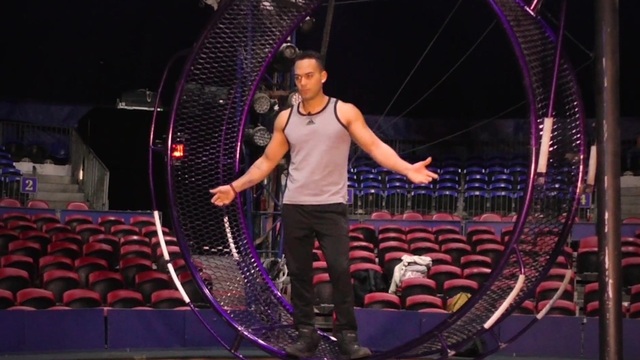
Do you know how to say "to get" in Spanish? Due to the numerous ways in which this word can be used in English, there is no "one size fits all" translation for this term. That said, let's explore the many meanings of the verb "to get" in English and learn their Spanish equivalents.
Breaking down the verb "to get" in English into many of its possible definitions, let's find out which verbs are used to express these ideas in Spanish and hear them in context.
"Efectivamente. Acaba de conseguir otro trabajo".
"Indeed. He just got another job."
Caption 60, Carlos explica 20 formas de decir sí sin decir sí
Play Caption
"Hoy recibí la carta".
"Today, I got the letter."
Caption 46, Carlos explica Los artículos en español - Part 2
Play Caption
Note that while the verb tener typically means "to have," it is a word that sometimes changes meaning in the preterite tense. Hence "Tuve una noticia" could be translated as "I got some news."
lograr obtener un buen resultado en el examen.
to manage to get a good grade on the exam.
Caption 42, Carlos explica Las preposiciones 'por' y 'para' - Part 1
Play Caption
Este... Saqué el bachillerato
Um... I got my high school diploma,
Caption 50, Cleer Entrevista a Giluancar
Play Caption
voy y te traigo la cerveza.
I'll go, and I'll get you the beer.
Caption 39, Los Años Maravillosos Capítulo 12 - Part 6
Play Caption
es en el caso que se nos termine la pasta dental y no podamos salir a la tienda a comprar otra.
is in case we run out of toothpaste and we can't go to the store to get another one.
Captions 50-51, Otavalo Consejos de salud bucal
Play Caption
Yo no entiendo por qué quieres actuar en esa obra.
I don't get why you want to act in that play.
Caption 32, Los Años Maravillosos Capítulo 9 - Part 3
Play Caption
Candelario se puso triste.
Candelario got sad.
Caption 44, Guillermina y Candelario El Gran Rescate
Play Caption
Keep in mind that a number of Spanish verbs intrinsically contain the idea of "to get" in the sense of "becoming." For example, the verb entristecerse also means "to get sad." Additional examples include mejorar (to get better), empeorar (to get worse), molestarse (to get annoyed), alegrarse (to get happy), and many more.
Todos pillamos el COVID y tuvimos que quedarnos en casa durante casi dos semanas.
We all got COVID and had to stay home for almost two weeks.
Regarding the use of the verb coger in this context, be aware that while it is extremely common in Spain, in many Latin American countries like Mexico, it has a vulgar connotation and should thus be exercised with caution.
El cuarto significado señala cuánto tiempo falta para llegar a un destino
The fourth meaning indicates how much time is left to get to a destination
Captions 3-4, Aprendiendo con Silvia Significados, usos y expresiones con "quedar" - Part 2
Play Caption
Incluso tuve la oportunidad de jugar a nivel competitivo.
I even got to play at a competitive level.
Caption 28, Club 10 Capítulo 2 - Part 2
Play Caption
y logré que para este caso nombraran a una juez que es amiga mía.
and, for this case, I got them to appoint a judge who's a friend of mine.
Caption 19, Confidencial: Asesino al Volante Capítulo 2 - Part 11
Play Caption
Remember that with all of these expressions, verbs that follow the conjunction que in Spanish should be conjugated in the subjunctive.
dónde la pueden mandar hacer o...
where you can get it made, or...
Caption 57, Rueda de la muerte Parte 1
Play Caption
An alternative way to express this would be: dónde pueden hacer que la hagan.
That's all for today. We hope that this lesson has helped you to realize the numerous ways in which the English verb "to get" is used and that you now know which Spanish verbs to choose for similar situations. Don't forget to write us with your questions and suggestions.

Are you familiar with the concept of grammatical agreement in Spanish? There are two main types of agreement in Spanish: noun agreement and verb agreement. Today's lesson will provide an introduction to each.
The concept of noun agreement is the following: Since Spanish nouns are either masculine or feminine and singular or plural, their definite or indefinite articles, adjectives, and other grammatical elements must correspond in terms of these attributes. Let's take a look at a chart that demonstrates this concept with masculine and feminine singular and plural nouns and their corresponding definite and indefinite articles.
| Singular: | Plural: | ||
|---|---|---|---|
| Masculine: | el chico (the boy) | los chicos (the boys) | |
| un chico (a boy) | unos chicos (some boys) | ||
| Feminine: | la chica (the girl) | las chicas (the girls) | |
| una chica (a girl) | unas chicas (some girls) |
The chart shows us the various ways to say "the" (el, los, la, las) and "a/an" (un, unos, una, unas), depending upon whether a noun is masculine or feminine and singular or plural. That said, let's keep a couple of additional points in mind regarding recognizing the number and gender of Spanish nouns and/or modifying them to achieve noun agreement.
1. Although many Spanish masculine singular nouns end in -o and many Spanish feminine nouns end in -a, this is not always the case. Therefore, less obvious nouns (e.g. el avión (the airplane) or la nube (the cloud)) require simply memorizing the gender of the noun, especially nouns that refer to inanimate objects. For this reason, Spanish students typically learn new nouns and their respective masculine or feminine definite articles simultaneously.
2. As a general rule, many nouns that end in a vowel require the addition of an -s to make them plural, while many nouns that end in a consonant become plural by adding -es. Applying this to the abovementioned nouns, el avión becomes los aviones while la nube changes to las nubes.
In addition to their articles, Spanish adjectives must also agree in terms of number and gender with the nouns they modify, with the same general spelling guidelines that we mentioned for pluralizing nouns. Let's hear how this works via some examples from our Yabla Spanish library:
Un coche bonito, unos coches bonitos. Una casa roja, las casas rojas.
A nice car, some nice cars. A red house, the red houses.
Captions 28-29, Fundamentos del Español 3 - Le Estructura de las Frases
Play Caption
unos ojos azules, inmensos...
some huge, blue eyes...
Caption 24, Extr@: Extra en español Ep. 6: El día de la Primitiva - Part 2
Play Caption
As you delve further into more complex Spanish grammar such as direct object pronouns, you will see how the number and gender of Spanish nouns continue to exert their influence.
Verb agreement in Spanish refers to the fact that Spanish verbs need to be conjugated in accordance with their respective subjects or subject pronouns, agreeing in number (singular or plural) and person (first, second, or third). Although this concept exists in English, it is much simpler due to the fact that there are less subject pronouns in English (seven vs. thirteen in Spanish) and far less verb forms. For example, for all of the seven English subject pronouns, there are only two verb forms, as we see below:
Subject Pronoun:
I: speak
you: speak
he: speaks
she: speaks
we: speak
they: speak
it: speaks
In Spanish, on the other hand, there are thirteen subject pronouns and many corresponding conjugations. Additionally, the manner in which each verb is conjugated depends upon which of the three common verb categories (-ar, -er, and -ir) it falls into, and many verbs are irregular, making verb agreement in Spanish significantly more complex. With this in mind, let's take a look at a chart with the conjugations of three common regular verbs, one from each category, in the present indicative tense:
| Subject Pronoun: | hablar: | comer: | subir: |
|---|---|---|---|
| yo | hablo | como | subo |
| tú | hablas | comes | subes |
| vos | hablás | comés | subís |
| él/ella/usted | habla | come | sube |
| vosotros/vosotras | habláis | coméis | subís |
| nosotros/nosotras | hablamos | comemos | subimos |
| ellos/ellas/ustedes | hablan | comen | suben |
If that doesn't seem nuanced enough, keep in mind that that was just one of the sixteen Spanish verb tenses, each of which has its own specific manner of conjugating verbs in order to ensure verb agreement.
We hope that these explanations have given you a better idea about the concept of noun and verb agreement in Spanish, which are essential to understanding Spanish sentences and constructing your own. Don't forget to write us with your questions and comments.
To start this lesson, let's take a look at a couple of very similar sentences with the Spanish word cuando (when) plus the verb ir (to go) where one is conjugated in the present indicative and the other in the present subjunctive:
Present Indicative:
Cuando voy a Barcelona, voy a la playa mucho.
When I go to Barcelona, I go to the beach a lot.
Present Subjunctive:
Cuando vaya a Barcelona, pienso ir a la playa mucho.
When I go to Barcelona, I plan to go to the beach a lot.
Although the translation is the same for both Cuando voy and Cuando vaya (When I go), in the second Spanish sentence, the verb ir is conjugated in the present subjunctive for a specific reason. Let's find out what it is!
The word cuando is used in Spanish with verbs in the present indicative when speaking about habitual actions or general truths. Let's see a couple of examples:
Cuando están encendidos, dan luz.
When they're on, they give off light.
Caption 37, El Aula Azul Adivina qué es - Part 2
Play Caption
Cuando lo hacemos con carne, podemos poner carne de cerdo, carne de ternera o pollo.
When we make it with meat, we can put in pork, beef, or chicken.
Captions 9-11, El Aula Azul Adivinanzas de comidas - Part 1
Play Caption
The indicative is used in these examples because, in the first caption, it's a general fact that when the streetlights in question are turned on, they give off light. In the second example, the speaker describes the habitual action of preparing paella with different ingredients.
On the other hand, the word cuando is used with verbs in the present subjunctive when speaking about actions that will happen in the future, that may or may not happen, or that some other action depends upon. To illustrate this point, let's take a look at sentences with the same verbs used previously, this time conjugated in the present subjunctive.
Bueno, OK, eso lo hablamos cuando estés acá,
Well, OK, we'll talk about that when you're here,
Caption 3, Yago 11 Prisión - Part 3
Play Caption
Cuando lo hagas correctamente, será verde.
When you do it correctly, it will be green.
Caption 26, Tutoriales de Yabla Consejos para usar Scribe
Play Caption
The subjunctive is employed with cuando in these examples because they both describe future events that have not yet taken place and upon which other events depend.
It is worth noting that while the aforementioned examples quite clearly fall into the categories of habitual vs. future actions, there are some cases where either the indicative or the subjunctive could be used in the same sentence, giving it a slightly different nuance. Let's take an example where someone is teaching us to bake:
Present Indicative:
Cuando las galletas están doradas, las saco del horno.
When the cookies are golden brown, I take them out of the oven.
Nuanced Meaning: Habitually, when the cookies are golden brown, I always take them out of the oven.
Present Subjunctive:
Cuando las galletas estén doradas, las saco del horno.
When the cookies are golden brown, I'll take them out of the oven.
Nuanced Meaning: At the moment when the cookies turn golden brown, I'll then take them out of the oven.
Quite interestingly, while the English translations are nearly identical, the choice of the indicative vs. the subjunctive in Spanish gives the two sentences slightly different meanings.
With this food for thought (pun intended!), we hope that you now know the reason for the different conjugations of the verb ir in the two introductory sentences and you understand when to choose the present indicative or subjunctive with the word cuando. Don't forget to write us with your questions or suggestions.
Are you familiar with the Spanish present progressive tense that utilizes the formula estar (to be) + gerund (the equivalent of the -ing form in English) to talk about an action in progress? Let's see an example:
¡Lo estás haciendo genial!
You're doing it great!
Caption 47, Aprendiendo con Zulbany Piensa rápido - Part 1
Play Caption
Now let's look at an example where the verb ir (to go) is used with the gerund in lieu of the verb estar:
tú vas haciendo y pasan dos horas y te dicen vale ya está.
you're doing it and two hours go by and they tell you OK, that's it.
Caption 55, Blanca y Mariona Proyectos para el verano
Play Caption
What's the difference? Although both estás haciendo and vas haciendo are translated as "you're doing" in these examples, the construction ir + gerund is often employed to emphasize the fact that an action is, was, or will be evolving over time, gradually, or as part of a process. Let's explore this notion a bit further.
As the formula suggests, this construction is created by combining a conjugated form of the verb ir (to go) in any tense with the gerund, for example, cambiando (changing), aprendiendo (learning), or diciendo (saying), which you can learn to conjugate in the aforementioned lesson on the present perfect. Let's see some examples in the present, imperfect, and future tenses.
Vamos cocinando (We're cooking)
Iban creando (They were creating)
Iremos entendiendo (We'll be understanding)
As we mentioned in the introduction, ir + gerund typically describes actions that take place over time, bit by bit, or as part of a process. Therefore, while their translations are sometimes the exact same as they would be if the verb estar were to replace the verb ir, this implication is present within this structure. With this in mind, let's see a few examples of this construction.
y... fuimos creciendo juntos en ese momento.
and...we were growing together at that moment,
Caption 77, Biografía Natalia Oreiro - Part 6
Play Caption
In this caption, the preterite tense of the verb ir is used to describe something that happened in the distant past. However, the formula ir + gerund was chosen to demonstrate that the "growing" being talked about was a process that was unfolding at that moment in time. Let's see another example:
Mientras la cebolla está pochando, en otra sartén vamos a ir haciendo la patata.
While the onion is sauteing, in another frying pan, we're going to be making the potato.
Captions 42-43, La cocina de María Tortilla de patatas
Play Caption
Here, the formula ir + gerund is once again used to talk about the process of making the potato over time. For this reason, you will often find this construction in sentences that contain the word mientras (while) to talk about an action that is evolving while something else happens. Let's look at one more example:
"Y el consciente..." ¿Viste como tú misma vas cambiando en la medida que vas trabajando?
"And the Conscious"... Did you see how you yourself are changing as you are working?
Captions 18-19, Escribiendo un libro Algunos consejos sobre cómo comenzar - Part 3
Play Caption
Once again, ir + gerund is utilized because "changing" and "working" are actions that aren't just in progress at some moment but are rather part of a bigger picture of evolution over time. So, the implication here is "Did you see how you yourself are (gradually) changing as you are working (over time)? In fact, words like "gradually" or "over time" may or may not be added to the translations of some instances of the ir + gerund construction, which is sometimes difficult to translate precisely.
That's all for today. We hope that this lesson has helped you to better understand the often seen but seldom talked about ir + gerund construction, and don't forget to write us with your questions and comments.
In Spanish, nouns are categorized into two grammatical genders: masculine and feminine. While the grammatical gender of a noun that describes a living being sometimes gives away that being's real life gender, there is a special category of nouns known as "epicene nouns" where this is not the case. In this lesson, we will explore the concept of epicene nouns in Spanish and provide you with several examples to better understand them.
When indicating real life gender in Spanish, for some living beings, there are different words for the male and female versions, for example, la vaca (the cow) vs. el toro (the bull). Others nouns indicate real life gender with changes to their endings and/or articles, such as the fact that el maestro refers to a male teacher, while la maestra is a female teacher.
Grammatically speaking, epicene nouns, like all nouns, are either masculine or feminine. However, what makes Spanish epicene nouns unique is that they are used for both the males and females of the beings they describe. For example, the noun la hormiga (ant) is a feminine noun that can be used to talk about either a male or female insect. Considering this, if you wish to say that a male ant was defending the queen ant, you would need to add the word macho (male) after it for clarification:
La hormiga macho estaba defendiendo a la reina.
The male ant was defending the queen.
Therefore, if you wish to provide this type of precise information regarding the real life gender of the noun about which you are speaking, the following terms should be used to talk about animals and people.
| MASCULINE | FEMININE | |
|---|---|---|
| ANIMALS | macho (male) | hembra (female) |
| PEOPLE | varón (male) | mujer (female) |
| masculino (masculine) | femenino (feminine) | |
It is important to keep in mind that grammatical agreement in terms of number and gender with epicene nouns is determined by a noun's grammatical gender rather than the sex of the entity it refers to. Let's see what we mean in the following example:
Correct: El tiburón hembra es muy peligroso (The female shark is very dangerous).
Incorrect: El tiburón hembra es muy peligrosa (The female shark is very dangerous).
As you can see, the masculine singular adjective peligroso (dangerous) is used to modify the masculine singular noun el tiburón (the shark), despite the fact that the shark is female. It would be wrong to choose the feminine singular form peligrosa in attempts to correspond to the feminine adjective hembra (female). Now that we know these rules, let's take a look at some of the most common epicene nouns in the Spanish language.
The majority of Spanish epicene nouns are words for animals. In the following list, you can see several:
el búho (the owl)
el camaleón (the chameleon)
la cebra (the zebra)
la hiena (the hyena)
la hormiga (the ant)
la jirafa (the giraffe)
la mosca (the fly)
el tiburón (the shark)
Interestingly, some other nouns like el perro (the dog) and el gato (the cat) may also be considered epicene as they could refer to either gender of these animals. However, in some circles, words like la perra and la gata could be chosen to describe male or female cats.
Now let's look at some epicene nouns for people:
la persona (the person)
la autoridad (the authority)
el personaje (the character)
la víctima (the victim)
el especialista (the specialist)
Some additional epicene nouns for people such as el estudiante (the student), el dentista (the dentist), or el cliente (the customer) can also refer to either men or women. Over time, however, their feminine versions (la estudiante, la dentista, la clienta) have come to be used by some people when referring to females who fit these descriptions.
Now that you understand the concept of epicene nouns, let's see a couple of examples from the Yabla Spanish video library. In the first one, you can see how the feminine epicene noun la víctima (the victim) is used to talk about a male victim, while in the second, the masculine noun el personaje describes a female "character":
¡él no es un asesino! Él, ante todo, es una víctima,
he's not a murderer! He, first and foremost, is a victim,
Captions 12-13, Confidencial: Asesino al Volante Capítulo 5 - Part 8
Play Caption
el nombre del personaje mitológico mexicano de 'la Llorona'.
the name of the Mexican mythological character 'La Llorona' [The Weeping Woman].
Caption 51, Carlos explica Recursos para consultas del español - Part 8
Play Caption
That's all for this lesson. We hope that you learned something new today, and don't forget to send us your comments and suggestions. ¡Hasta la próxima!

 French
 German
 Italian
 Chinese
 English
 English
  Français
 Deutsch
 Español
 Italiano
 Português